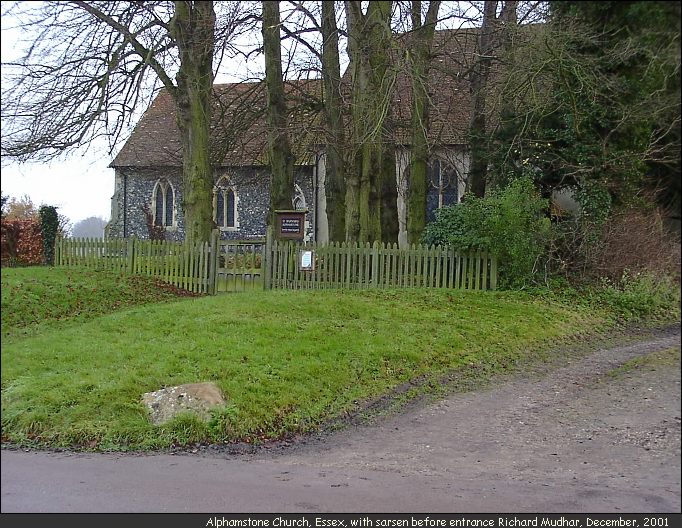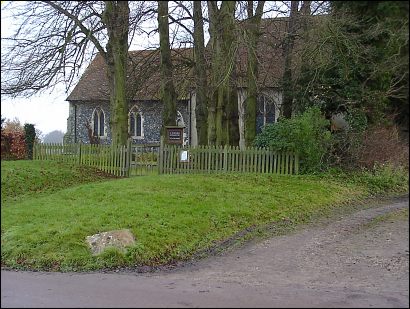
Overview of Alphamstone Church, Essex, with stone G in the foreground
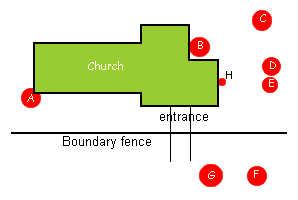
Outline plan of the church showing the location of the stones
(after Essex Dawn
plan)
St Barnabus church in Alphamstone, Essex does seem to be an unusual home
to several sarsen-like stones which are not unlike megaliths. If they are of prehistoric
origin then this would carry on the venerable tradition of churches being located on
earlier Neolithic sites. Rudston in Yorkshire
is the most obvious example.
These stones are unusual because the eastern counties are not rich in
megalithic sites - there are no stone circles east of a line joining Rudston in Yorkshire to the Rollright Stones in Oxfordshire. Much of this can be
explained by the fact that there is very little raw material and stone is in short supply
in the eastern region. Even if stone circles and megaliths existed they would be more
likely to be consumed for building material over the intervening centuries, and much of
the area was thick impenetrable forest in prehistoric times.
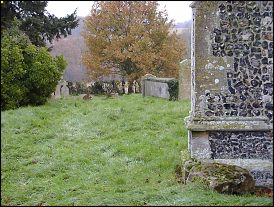
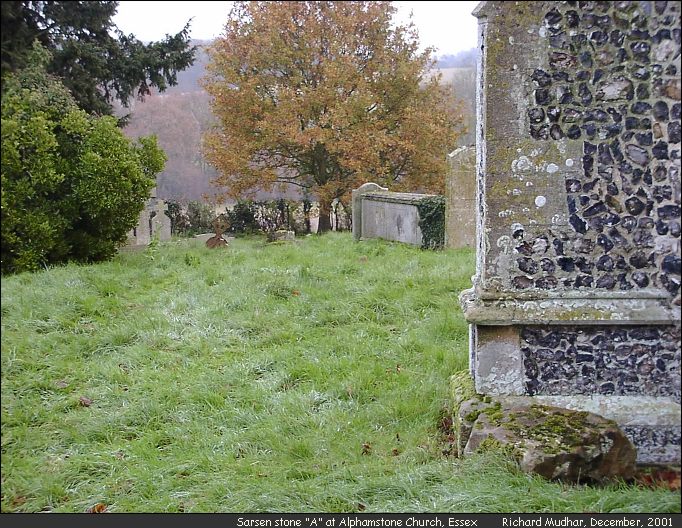
Stone A next to a buttress
|
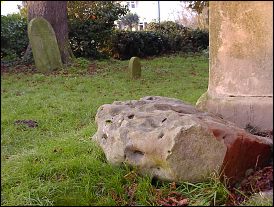
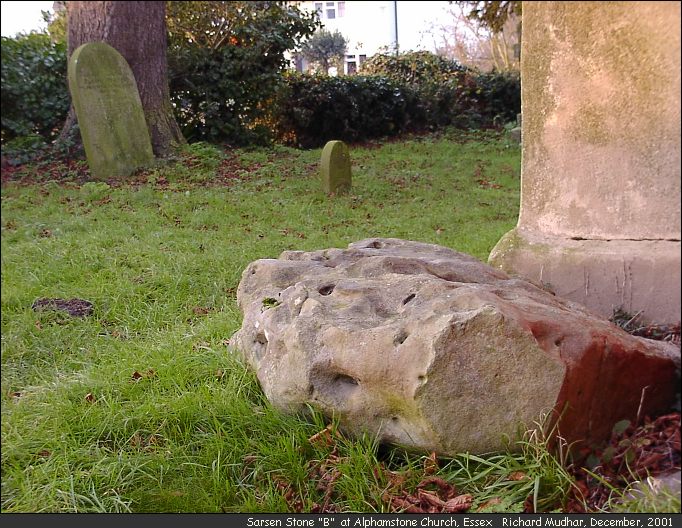
Stone B near the wall of the church
|
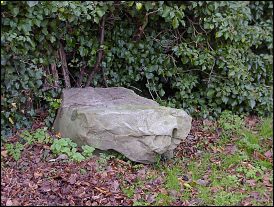
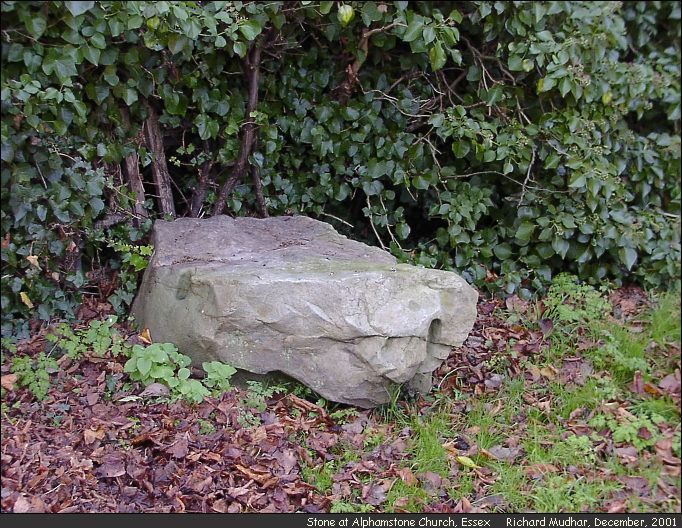
Stone C
|
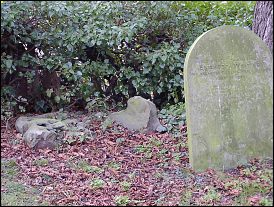
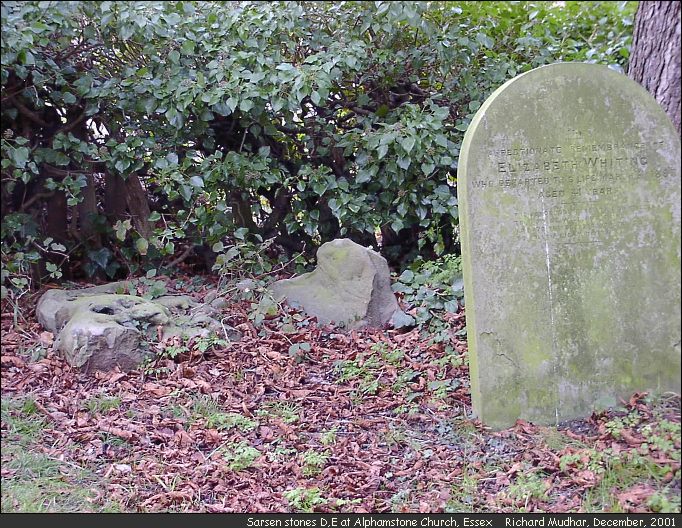
Stones D & E
|
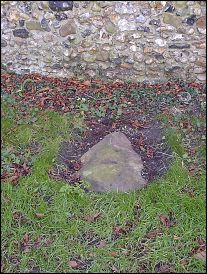
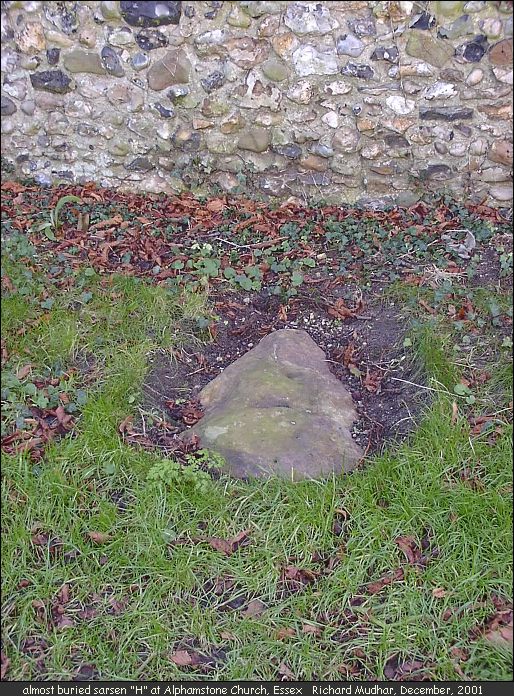
Stone H
It can't be denied that there is something highly unusual about these
stones in the churchyard but I couldn't swear that these were of prehistoric origin - some
more information needs to be found to complete the picture. Terry Johnson states[35] in his book that the church is on the site of a
Bronze age burial mound which would support the site as one of prehistoric significance,
as does the discovery of several Bronze Age urns around the churchyard (these are now in
Colchester Museum). His book indicates that more stones are to be found here - around 11
within the church boundary.
Read more about this site in Essex Dawn from the Essex
Pagans society. |